
Why your yard floods in the same spot every spring
If the same corner of your yard turns to soup every February, the problem is almost never the rain. It is the grade, the clay underneath it, and where the roof water is being put.
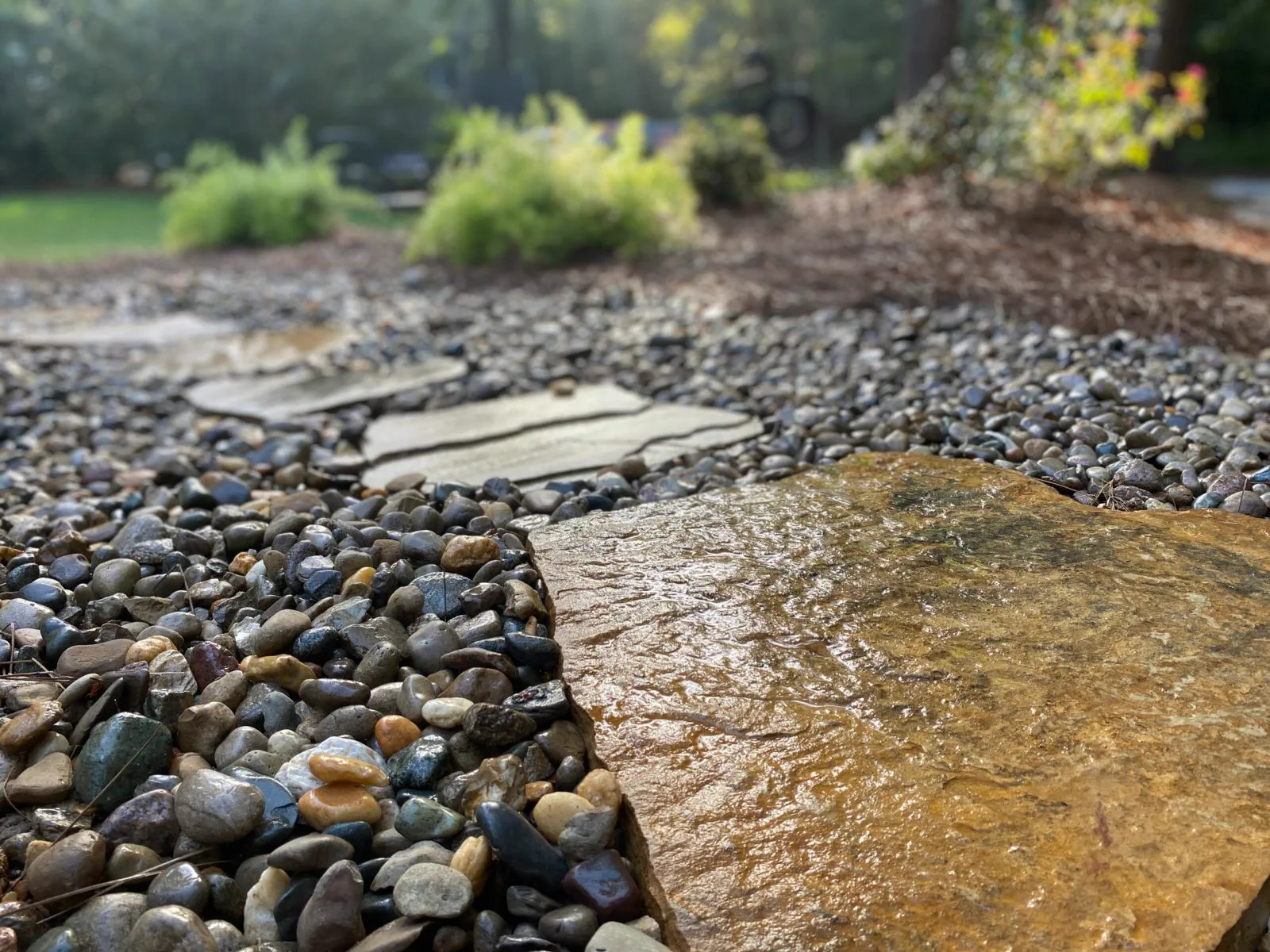
The ground here does not drain
Most of Columbia County sits on tight red clay. Water moves through sand in minutes and through our clay in hours, sometimes days. That is why a yard can look fine in July and hold standing water for a week in February — the rate has not changed, the soil has simply run out of anywhere to put it.
So the first question on a wet yard is never "how do we soak this up." It is "where is this water coming from, and where should it go instead."
Three culprits, in order
Nearly every standing-water call we take in Evans and Martinez comes down to one of three things, and usually the cheapest one to fix is the one nobody has looked at.
- Downspouts discharging at the foundation. A single downspout can put hundreds of gallons against your slab in one storm. Routing it underground to daylight is often the entire fix.
- A negative grade against the house. Settlement, a new patio, or years of mulch piled higher each spring can tip the ground back toward the foundation instead of away from it.
- A low spot with nowhere to go. Water is arriving faster than it can leave, and the yard has no outlet. This is the one that needs a real system.
What an actual fix looks like
A French drain is a trench, a perforated pipe, washed stone and fabric, cut on a fall so gravity does the work. It only works if it has somewhere to end — daylight at a slope, a pop-up emitter, or a properly sized dry well. A drain that ends nowhere is a buried puddle.
Where the low spot is visible from the house, we would rather build the outlet as a dry creek bed. It carries the same water, it does not look like a repair, and it stops being a maintenance item nobody wants to mow around.
Do it before the patio, not after
Grading and drainage go in first. Fixing water after the pavers are set means lifting the pavers. That is the single most expensive sequencing mistake we get called to undo, and it is entirely avoidable — which is the whole reason drainage is one of our own trades rather than a subcontractor we hand the problem to.